


Preoperative Clearance in Plymouth: How Long It Takes
The history and physical often sets the pace for preoperative clearance in Plymouth. If no additional evaluation is needed, clearance can be completed after that assessment; requested tests or health concerns that need attention can add time before your surgical team receives the necessary information.
It’s understandable to want a clear timeline when surgery is approaching. Knowing what a preoperative clearance evaluation covers and what can affect the next steps helps you prepare. This article explains the history and physical, how information is shared with your surgeon, and why timing varies. You’ll also learn what to bring and how your medical history, medications, and planned procedure can shape the evaluation.
Table of Contents
Clearance forms and communication with surgeons
Preoperative clearance paperwork connects a review of your health with your planned procedure. Your surgical team uses the completed information to coordinate preparation, updates, and recovery planning.
Health Review Before Surgery
A pre-surgical evaluation reviews your health, medical history, medications, supplements, and physical condition. Age, allergies, and heart or lung health may affect your response to anesthesia. Bring a current medication list and describe conditions such as asthma or hypertension. Also share information about smoking and alcohol use. These details help the clinician identify questions or tests relevant to your procedure.
Clearance Forms and Appointment Scheduling
To arrange preoperative clearance in Plymouth, ask your surgeon’s office which forms and timing instructions apply, then book an assessment with a primary care clinician. A cardiologist or pulmonologist may contribute when your health needs specialist input. Bring the forms, medication list, and relevant medical history to your appointment.
After the evaluation, confirm which completed forms and findings must reach the surgeon. The clinician’s assessment may include recommendations or requests for additional testing, so share new symptoms or medication changes promptly. Some herbal supplements may need to be stopped 1-2 weeks before surgery; discuss each one with your healthcare team before making changes.
Follow your surgical team’s instructions for preparing for surgery, including what to bring and whom to contact with questions. Discuss anesthesia, recovery expectations, and discharge arrangements before the procedure. For example, confirm who will take you home and which care instructions you’ll need to follow after discharge.
Purpose and benefits of preoperative medical clearance
This evaluation checks whether health conditions could affect surgery, anesthesia, or recovery. In Plymouth, Minnesota, a primary care physician may assess you, with cardiology or pulmonology input when your health needs call for it.
Preoperative evaluations may be provided through primary care practices or hospital-based pre-surgical services, depending on the surgical plan and your care needs. Coverage for a visit depends on your insurance benefits and how the evaluation is billed. Review your plan documents for relevant coverage details.
Individualized Clearance Testing
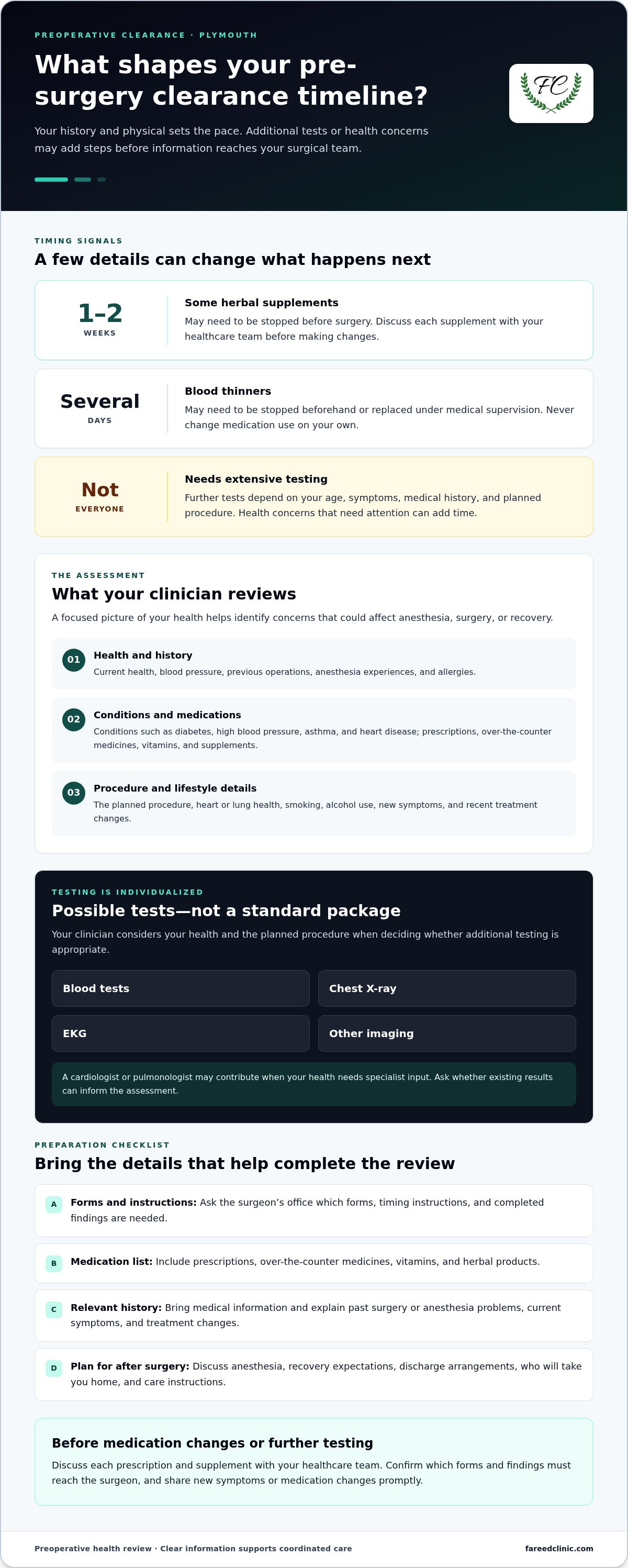
Testing is guided by your age, symptoms, medical history, and planned procedure. It may include blood tests, a chest X-ray, an EKG, or other imaging; not everyone needs extensive testing or specialist input. Ask which results your surgical team needs and whether existing results can inform the assessment. This helps keep testing relevant to your health needs.
Medical and Surgical History Review
Share previous operations, anesthesia experiences, allergies, and current prescriptions, over-the-counter medicines, and supplements. Diabetes, high blood pressure, asthma, and heart disease can affect surgical risk when they are not well managed. These details help primary care clinicians and internal medicine specialists assess your needs; a specialist may contribute when a condition calls for focused evaluation.
Medication instructions are individualized. Some herbal supplements may need to be stopped 1-2 weeks before surgery; blood thinners may need to be stopped several days beforehand or replaced under medical supervision. Don’t change medication use on your own. Discuss each prescription and supplement with your healthcare team, including how any needed health adjustments could affect procedure timing.
Preoperative history and physical
A preoperative history and physical (H&P) gives the clinician a focused picture of your health before surgery. At the appointment, expect a review of your medical history, current health, medications, supplements, and allergies. The clinician also performs a physical examination and considers the planned procedure. This assessment helps identify concerns that could affect anesthesia, surgery, or recovery.
Be prepared to describe past surgeries and any problems with anesthesia. Age, medications, allergies, and heart or lung health can influence your response to anesthesia. Mention diabetes, high blood pressure, asthma, or heart disease, including how each condition is managed. Blood pressure and other details about your current health help shape the evaluation. Bring a complete medication list, including vitamins and herbal products.
Also give clear answers about smoking and alcohol use. This information helps the clinician assess your health before surgery. If you have new symptoms or a recent treatment change, explain when it began and what changed. Ask how your medical history could affect anesthesia, recovery, or the next steps in your assessment. Your questions are part of preparing for surgery.
The evaluation does not automatically require extensive testing. The clinician considers your age, symptoms, history, and procedure when deciding whether further tests are appropriate. Bring the surgeon’s instructions and forms, then clarify what information needs to reach the surgical team. For preoperative clearance in Plymouth, bring relevant records and ask which findings or follow-up steps remain before surgery. This gives you a practical list of actions to discuss with your care team.
Fareed Clinic: Chronic Medical Problem Management
Fareed Clinic provides Chronic Medical Problem Management for patients managing ongoing health conditions. If diabetes, high blood pressure, or another chronic concern needs attention as you prepare for surgery, this care can address it as part of your broader health needs. Physical Exams and Lab Tests and Screenings can also support a review of your health.
Bring your surgeon’s instructions and a current medication list when discussing your care. Share changes in symptoms or treatment, and ask how your health conditions may affect preparation and recovery. Fareed Clinic also offers Shoulder & Knee Injections; discuss whether this service is relevant to your care. Contact Fareed Clinic to discuss your health needs and next steps.
Take the Next Step With a Clear Plan
Before your surgery date, gather your surgeon’s requirements and outstanding questions in one place. This gives you a practical starting point for discussing what remains and coordinating next steps. For preoperative clearance in Plymouth, include any ongoing health needs in the conversation as you prepare for your procedure.
Fareed Clinic offers Chronic Medical Problem Management, Physical Exams, and Lab Tests and Screenings. These services can support conversations about your health as you plan for surgery. Follow your surgical team’s instructions as you organize follow-up and paperwork.
Contact Fareed Clinic to discuss clearance and take your next step with a thoughtful plan for surgery.
Frequently Asked Questions
How long will it take?
Timing depends on whether the evaluation requires only an examination or also further testing and follow-up. An assessment may be completed at the appointment, while additional testing or a health concern that needs attention can extend the process. Plan around your scheduled surgery date, allowing time for results and completed paperwork to reach the surgical team.
What Happens During the Evaluation Process?
The clinician reviews your health information, asks about your medical history and medications, and performs a physical examination. They then decide whether further assessment or testing is appropriate for your situation. For example, a symptom or health condition that needs closer attention may lead to another step before the surgeon receives the evaluation findings.
What Is Surgical Clearance?
Surgical clearance helps inform whether a planned operation is medically appropriate. It reflects the findings from your pre-surgical assessment and any follow-up needed to address health concerns. Clearance informs surgical planning; it is not the surgery itself. Your surgical team uses relevant assessment information to prepare for your procedure.
What Is a Pre-Surgical Evaluation?
A pre-surgical evaluation assesses your overall health before an operation. Its purpose is to identify conditions that could affect surgery, anesthesia, or recovery. It may include a medical history review, physical examination, and tests selected for your health needs. The evaluation provides information to support decisions about preparation and surgical planning.
What do I need to bring?
Bring the surgeon’s forms, a current list of medications and supplements, and notes about your health conditions and allergies. Include medication names and doses, and gather available records of previous surgeries or anesthesia problems. Bring details of recent test results, too. Organizing this information helps the clinician review your situation efficiently.



Comments