


Minimal Meds: Managing Chronic Care in Plymouth
More treatment isn’t always better for chronic care. Minimal meds means focusing on medicines that are safe, necessary, and add value to your life, alongside simple, ongoing actions that support your health. The goal is thoughtful care, not simply fewer prescriptions.
It’s understandable to want a care plan that feels clear and manageable, especially when you’re living with a long-term condition. Clear explanations and small, consistent steps can make it easier to understand what to do next. This article explores how a minimalist approach can inform chronic care, what to consider when reviewing medicines, and how communication, lifestyle, and ongoing support fit together. If you’re in Plymouth or nearby, primary care can support a considered approach to managing chronic conditions.
Table of Contents
Minimalist interventions in general practice
Simple, brief, low-cost actions, repeated over time, can shape care. The National Academy of Medicine reported that health care determines only 10% of overall health.
Conditions managed with fewer medications
Medication needs can change with your health, goals, and response to treatment; taking fewer medicines isn’t a goal in itself. For people with oral glucose intolerance, lifestyle interventions have been associated with a significant reduction in diabetes incidence. Diet and exercise matter for health, but they don’t automatically replace prescribed treatment. Reviewing daily routines and health measures can help clarify which supports fit your care.
Benefits and risks of reducing medications
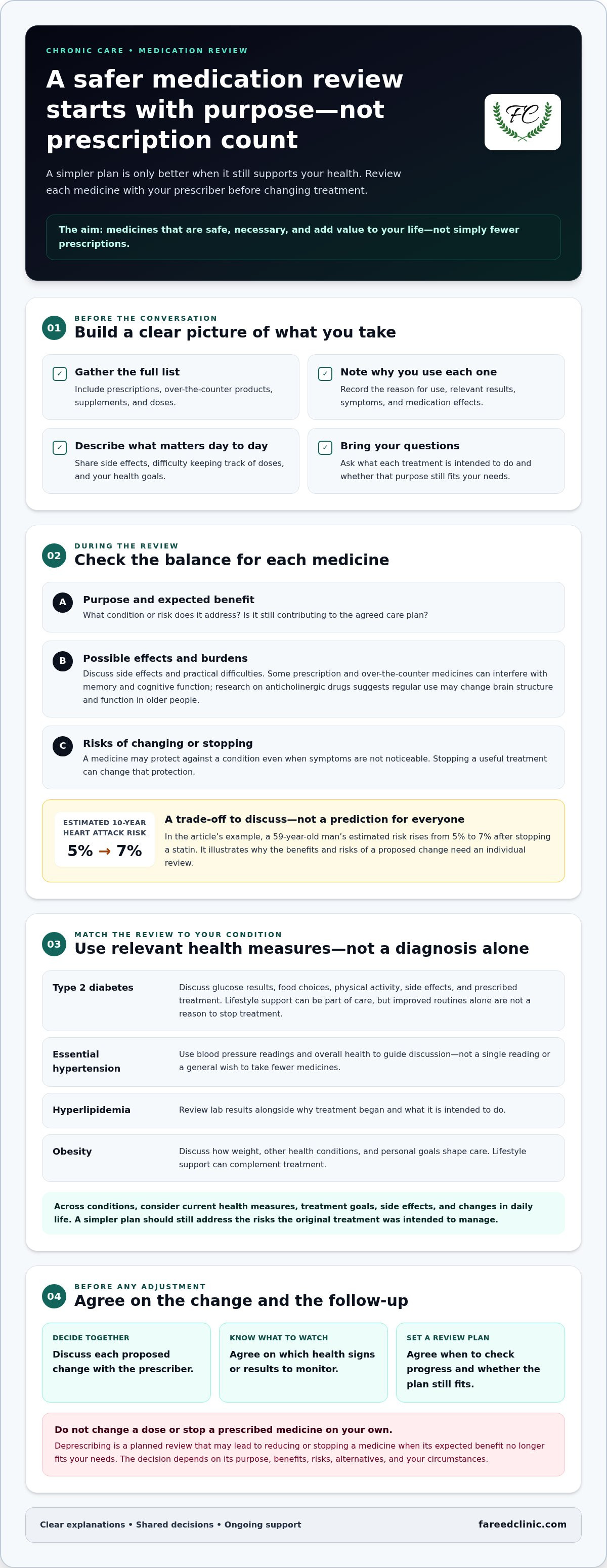
A careful review can identify medicines whose effects or burdens deserve discussion. Common prescription and over-the-counter medications can sometimes interfere with memory and cognitive function. Research on anticholinergic drugs suggests regular use may change brain structure and function in older people. Stopping a useful medicine can also shift risk: in one example, a 59-year-old man’s estimated 10-year heart attack risk rises from 5% to 7% after stopping a statin. Weighing these trade-offs helps keep the focus on what each medicine contributes.
Safe medication review and reduction
Bring a current list of prescriptions, over-the-counter products, supplements, doses, and reasons for use. Tell your doctor about side effects and health goals, then agree together on any changes and follow-up. The U.S. Food and Drug Administration’s final rule adopts a uniform 12-digit format for the National Drug Code (NDC), effective March 7, 2033. In Plymouth, search your health plan’s directory or contact local primary care offices and pharmacies about medication reviews.
Deprescribing and eligibility
Deprescribing is a planned review that may lead to reducing or stopping a medicine when its expected benefit no longer fits your needs. It may be considered when treatment goals, health status, side effects, or preferences have changed. Whether a change is appropriate depends on reviewing the medicine’s purpose, benefits, risks, and alternatives. Discuss each proposed change with the prescriber, especially when a medicine supports an ongoing condition.
What health conditions can be managed with fewer medications?
For type 2 diabetes, essential hypertension, hyperlipidemia, and obesity, care plans can include both medicines and non-drug support. A diagnosis alone doesn’t show whether a medicine remains useful. Clinicians consider current health measures, treatment goals, side effects, and changes in daily life. Reducing medicine is appropriate only when those details support a safer, effective plan.
With type 2 diabetes, food choices and physical activity are part of managing health. Glucose results help show how the plan is working; prescribed treatment should not be stopped simply because routines have improved. Instead, discuss results and side effects during a review. The same principle applies to hypertension: blood pressure readings and overall health guide decisions about treatment, not a single reading or a general wish to take fewer medicines.
For hyperlipidemia, review lab results alongside why treatment began and what it is intended to do. For obesity, discuss how weight, other health conditions, and personal goals shape care. In both cases, lifestyle support can complement treatment, while medication changes require a clear rationale. A simpler plan should still address the health risks the original treatment was intended to manage.
Keep a record of relevant results, symptoms, and medication effects before discussing changes. This gives a clinician useful context for comparing progress over time and deciding whether a treatment still fits. If you’re looking for continuing support, chronic condition care can help organize conversations about your health goals and treatment plan.
Marie Savard lived about two hours from her parents and helped them manage their medications. Her parents kept medication bottles in several places around the home, including the kitchen, her mother’s purse, and the upstairs bathroom. Savard recommends simplifying an older loved one’s medications so they take only what is safe and important to them.
Savard defines medication minimalism as focusing on medicines a person needs that are safe and add value to their life. Diet and exercise are important parts of staying healthy. A practical, person-centered health strategy also includes patient participation, communication, empathy, and compassion.
What are the benefits and risks of reducing medications?
A medication review can show whether each treatment still serves its intended purpose. A simpler regimen may reduce the work of managing medicines and make the plan easier to follow. But fewer prescriptions aren’t automatically safer. A medicine may control a condition even when symptoms aren’t noticeable, so stopping it can change the protection the care plan provides.
Consider the trade-off between treatment benefit and possible harm. An editorial in Annals of Internal Medicine stated that as few as 1 person per 1,000 people screened over 10 years will benefit from cancer screening. A 45-year-old woman’s decision about mammograms illustrates how people may weigh a small potential benefit against possible overdiagnosis. Screening is not medication, but the example shows why personal priorities matter when weighing medical interventions.
The balance for each medicine depends on the condition, the treatment’s purpose, side effects, and what matters in daily life. Share practical details, such as difficulty keeping track of doses or an unwanted effect that disrupts your routine. These details can make the discussion more useful than focusing only on the number of prescriptions.
Before changing a dose or stopping a medicine, discuss the plan with the prescribing doctor. Agree on what change is being considered, what health signs to watch, and when to review progress. A clear plan helps connect any adjustment to the condition being treated. To talk through your chronic-care treatment plan, arrange a conversation with a primary care professional.
Minimalist interventions in general medicine are simple, low-cost, brief, ongoing actions that may affect patients even when they seem small. Savard advises families to pay attention to an older loved one’s medications sooner rather than later.
A decades-old study suggested that using vegetable oil as the main source of dietary fat might not be as beneficial as experts had imagined.
Fareed Clinic: Chronic Medical Problem Management
Fareed Clinic provides Chronic Medical Problem Management for people who want to discuss ongoing conditions and understand their care plan. Bring your current medication list, questions, and any changes you’ve noticed in your health. A conversation can help clarify treatment goals and what to discuss next.
Physical Exams and Lab Tests and Screenings can support assessment and follow-up as part of ongoing care. For shoulder or knee concerns, the clinic also offers Shoulder & Knee Injections. These services may be relevant when symptoms or health results raise questions about how your care is working.
If you’re ready to discuss chronic care, contact Fareed Clinic or visit fareedclinic.com.
Make Your Next Care Conversation Count
Minimal meds means thoughtful treatment, not reducing prescriptions for their own sake. Your next step can be a focused conversation about what you want your care to make easier, which changes you’ve noticed, and what questions remain. Bring those priorities and your medication list so the discussion reflects your daily life, not just a chart.
Fareed Clinic provides Chronic Medical Problem Management, Physical Exams, and Lab Tests and Screenings to support conversations about ongoing health needs. These services can give context for discussing your care and considering what follow-up makes sense for your goals.
When you’re ready to discuss your care, contact Fareed Clinic. A clear conversation is a meaningful place to begin.
Frequently Asked Questions
What does “minimal meds” mean?
“Minimal meds” means using medicines that suit your health needs, rather than aiming for the fewest possible prescriptions. It isn’t a fixed number or a plan to stop treatment. For example, a medication review can include prescriptions, over-the-counter products, and supplements, helping you discuss how each fits your current care goals.



Comments