


Diabetes Screening in Plymouth, MN: A Proactive Guide to Your Health
Updated: Sep 18
Did you know that roughly one in ten Minnesotans living with diabetes don't even realize they have the condition? It's completely natural to feel a bit of anxiety when considering a medical test, especially if you're worried about high out-of-pocket costs or a life-changing diagnosis. You want clear answers, but you also want to feel supported by a provider who treats you like a neighbor. This guide will show you how a personalized diabetes screening Plymouth MN can replace that uncertainty with a clear, proactive plan for your long-term wellness.
We'll explore the specific risk factors to watch for, clarify the differences between common blood tests, and explain how a compassionate approach provides the actionable advice you need. Early detection is a powerful tool, and getting the right information today ensures you can focus on living a vibrant, healthy life.
Table of Contents
Why Diabetes Screening is Vital for Plymouth Residents
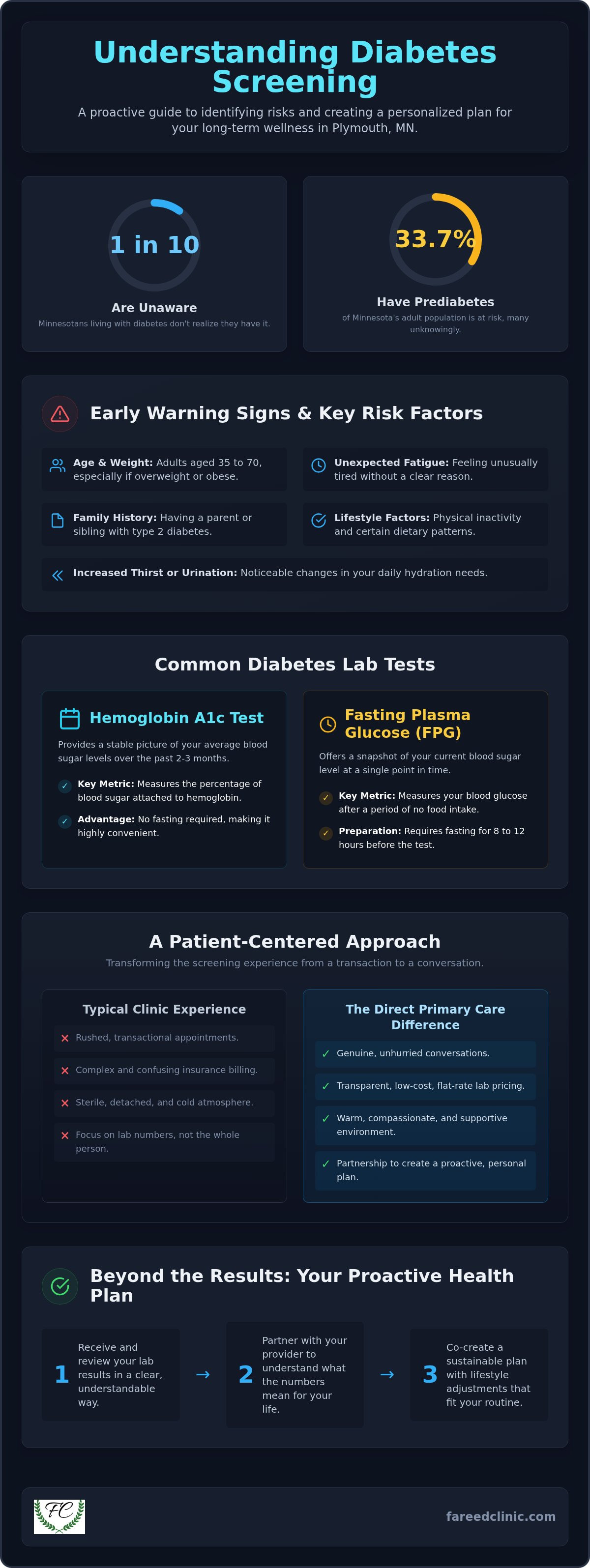
Think of a diabetes screening as a proactive window into your future wellness. It's a simple tool that measures blood sugar levels before symptoms become severe or life-altering. In Minnesota, approximately 33.7% of the adult population has prediabetes, yet many neighbors right here in Plymouth are unaware of their status. Screening isn't a response to illness; it's an empowering act of self-care that gives you the data to protect your long-term vitality. To see how functional medicine clinics help high-performers optimize this health data, you can discover 5280 Restorative Medicine.
Recognizing the Early Warning Signs and Risk Factors
While many people feel perfectly fine in the early stages, certain indicators shouldn't be ignored. You might notice increased thirst, unexpected fatigue, or simply have a family history that puts you at higher risk. Lifestyle factors in the West Metro area, from our busy work-life balance to seasonal activity changes, can also influence your metabolic health. It's helpful to review the U.S. Preventive Services Task Force recommendations, which suggest regular checks for adults aged 35 to 70 who are overweight.
If you meet these criteria or have noticed subtle changes in your energy, consider scheduling a health screening in Plymouth, MN. A diabetes screening Plymouth MN provides the clarity you need to move forward with confidence. Identifying risks early means we can work together on a plan that fits your life, rather than letting a diagnosis dictate it for you.
Understanding the Types of Diabetes Lab Tests in Plymouth, MN
Choosing the right test depends on your unique health history and goals. The Hemoglobin A1c is often favored for its convenience because it doesn't require fasting. It provides a stable picture of your blood sugar levels over the past few months, making it a reliable indicator of long-term trends. In contrast, the Fasting Plasma Glucose (FPG) test offers a snapshot of your current metabolic state. While it requires you to avoid food for several hours, it's an essential tool for confirming results and ensuring accuracy. For those seeking a more comprehensive view of their health through specialized wellness or DNA panels, you can discover Dyvine Medical & Wellness.
When you come in for a diabetes screening Plymouth MN, we'll help you decide which tests are most appropriate based on the latest clinical guidelines for screening for prediabetes and type 2 diabetes. Numbers alone don't tell the whole story. A lab result is just one piece of a larger puzzle that includes your lifestyle, genetics, and daily habits. This is why clinical interpretation is so vital. Having a dedicated provider to walk you through your results ensures you aren't just looking at data, but understanding what those figures mean for your daily life.
How to Prepare for Your Screening Appointment
To get the most accurate results, preparation is key. If your visit includes an FPG test, you'll generally need to fast for 8 to 12 hours. We often recommend scheduling morning appointments at our clinic to make this process easier and to fit seamlessly into your West Metro schedule. The A1c test measures the percentage of blood sugar attached to hemoglobin, the oxygen-carrying protein in red blood cells, over a 90-day period. If you're ready to gain clarity on your health, you can schedule your lab tests and screenings in a comfortable, local setting.
The Fareed Clinic Difference: Personalized Screening and Follow-up
Our approach to chronic disease management begins with more than just a needle prick; it starts with a genuine, unhurried conversation. We believe that a diabetes screening Plymouth MN should be a moment of connection rather than a rushed transaction. Instead of the sterile, detached atmosphere common in traditional clinics, we offer a warm space where your concerns are heard and respected. This patient-centered focus ensures that you feel like a person, not just a chart number, from the moment you walk through our doors.
Because we utilize a Direct Primary Care model, we're able to offer transparent, low-cost lab testing without the confusion of complex insurance billing. Our flat-rate payment options ensure you know exactly what to expect before your visit even begins. This transparency helps alleviate the white coat hypertension that often stems from financial stress or clinical coldness. We've designed our environment to be a safe haven where you can discuss your health with a compassionate neighbor who also happens to be a medical expert.
Beyond the Results: Creating Your Proactive Health Plan
If your results indicate prediabetes, we won't just leave you with a list of restrictions. We partner with you to navigate the path forward using sustainable lifestyle adjustments that fit your daily routine. While there are several types of diabetes tests used for diagnosis, the true value lies in how those results are applied to your life. We'll work together to craft a personalized health plan that focuses on your unique needs. As a dedicated partner in the Plymouth community, we're here to provide the steady guidance you deserve. We invite you to book a wellness exam today to get your baseline numbers in a truly supportive setting.
Taking the Next Step Toward Your Long-Term Wellness
We've explored why early detection is vital and how specific lab tests provide the clarity you need. By choosing a personalized approach, you can turn medical data into a supportive health plan that fits your life. A proactive diabetes screening Plymouth MN is the best way to gain peace of mind and protect your future vitality.
At Fareed Clinic, we provide a comfortable environment where you're never rushed. Our unhurried 30 to 60 minute appointments give us time to discuss your results thoroughly. We offer flat-rate pricing for non-members to ensure transparency and are conveniently located in Plymouth for West Metro residents. Schedule your proactive diabetes screening at Fareed Clinic today. Your health is a journey, and we're your dedicated partner every step of the way.
Frequently Asked Questions
How often should I get a diabetes screening in Plymouth?
Most adults should schedule a diabetes screening Plymouth MN every three years if their results are within the normal range. However, if you have risk factors like a family history of the condition or are overweight, we might recommend annual checks. We'll help you determine the right frequency during your unhurried wellness exam.
Will my insurance cover diabetes lab tests at Fareed Clinic?
We operate on a Direct Primary Care model, which means we don't bill insurance companies directly for our services. Instead, we offer transparent flat-rate payment options for lab tests and screenings. This approach often saves you money and removes the stress of unexpected bills or high out-of-pocket costs from major hospital systems.
What is the difference between Type 1 and Type 2 diabetes screening?
Routine screening is primarily designed to detect Type 2 diabetes and prediabetes before symptoms occur. Type 1 diabetes is an autoimmune condition that usually presents with sudden, severe symptoms, leading to an immediate diagnostic visit rather than a preventive screening. Our focus is on identifying metabolic changes early to keep you healthy and vibrant.
Can I get a diabetes screening even if I do not have symptoms?
Yes, getting a diabetes screening Plymouth MN is actually most effective when you don't have symptoms. Since prediabetes and early Type 2 diabetes often develop silently, proactive testing allows us to catch issues early. This gives you the best chance to manage your health through simple lifestyle adjustments before any serious complications arise.
How long does it take to get my lab results back?
You can typically expect your lab results within 24 to 48 hours of your visit. Once the data is ready, we'll have a thorough conversation to explain what the numbers mean for your wellness. We prioritize clear, personal communication so you're never left waiting or wondering about your health status or next steps.


Thinking about making particle physics approachable, I find the smaller practical questions more interesting than a quick conclusion. An everyday analogy can help introduce an idea while still leaving room to explain its limits. It gives me a more concrete starting point for thinking about particle physics basics. I would be interested in a simple example, because it is often the ordinary details that make an idea memorable. Which comparisons make particle physics easier to picture without creating misconceptions?
When it comes to connecting school learning with Wasilkow, I would rather understand one useful detail properly than rush through a long list of ideas. A project about nearby places can give students a shared starting point for research. This is why I would approach Wasilkow school community with a specific question rather than a fixed expectation. The part I would like to explore further is what happens when the idea meets a real situation with its own limitations. Which community questions could students investigate through interviews or observation?
My first thought about sharing cultures through language learning is that the everyday experience deserves as much attention as the larger explanation. An everyday conversation can reveal cultural habits that a vocabulary list cannot explain. Seen this way, European cultural exchange becomes a topic to explore rather than something to sum up too quickly. I can imagine different answers depending on the situation, so I would want to understand the context before drawing conclusions. What kinds of shared activities make an exchange feel meaningful?
What interests me about supporting the move into secondary school is how a broad idea becomes part of an ordinary day. New routines can take time to become familiar even when a student enjoys the lessons. It gives me a more concrete starting point for thinking about secondary school transition. I would probably come back to this question after trying to work through one concrete example rather than deciding immediately. Which parts of the school day need the clearest introduction for new students?
Thinking about applying business training to everyday work, I find the smaller practical questions more interesting than a quick conclusion. A useful training exercise should connect a new idea with a situation people actually encounter. That is the kind of detail I would keep in mind while exploring practical business training. I do not have a settled view yet, but this seems like a good place to slow down and look more closely. How would you check whether a workshop changes behaviour after it ends?